

Description
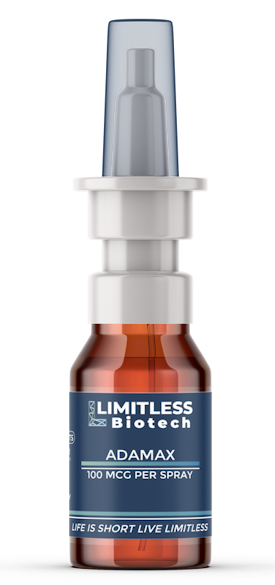
Semax Peptide Nasal Spray is a synthetic nootropic peptide derived from adrenocorticotropic hormone (ACTH), specifically an analog of ACTH(4-10). Developed in Russia, it is designed for cognitive enhancement, neuroprotection, and brain health support without hormonal activity.
It features high stability and bioavailability, crossing the blood-brain barrier effectively via intranasal administration. Typically available in 5mg or 10mg nasal spray vials, Semax allows direct delivery to the brain through the olfactory pathway. [1][2][3][6][10]
Semax is primarily marketed as a research chemical for laboratory and experimental use, not for direct human consumption. It is not approved by the FDA for therapeutic purposes, though it is used medically in some countries like Russia for conditions such as stroke and brain injury.
Its legal status varies by region, often classified as a research compound. [7][14] Always consult a healthcare professional before use, and adhere to local laws.
What It Is Supposed to Do
Semax modulates brain-derived neurotrophic factor (BDNF) expression and TrkB receptor activity in the hippocampus, promoting neuron growth, survival, and synaptic plasticity. It influences neurotransmitter systems, including dopamine, serotonin, and norepinephrine, while offering anti-inflammatory, antioxidant, and neuroprotective effects. Semax may regulate the hypothalamic-pituitary-adrenal (HPA) axis for stress management and support recovery in neurological conditions like stroke, Alzheimer’s, and depression. [2][3][4][5][8][9][11]
Overall, Semax is intended to enhance cognitive function, protect neural tissue, and provide therapeutic potential in research for disorders such as ADHD, anxiety, depression, and age-related cognitive decline.
Key Benefits
Based on preclinical studies, clinical trials, and user reports, Semax offers several potential advantages:
- Cognitive Enhancement: Boosts focus, attention, memory retention, learning capacity, and problem-solving by enhancing synaptic plasticity and neurotransmitter balance.[1][3][5][8][12]
- Neuroprotection and Neurogenesis: Shields neurons from oxidative stress and damage, promotes new neuron growth, and may alleviate beta-amyloid pathology in Alzheimer’s models.[6][9][13][15]
- Mood and Stress Regulation: Displays anxiolytic and antidepressant properties, reduces stress and anxiety, stabilizes mood, and boosts motivation and energy.[4][5][10][16]
- Physical Recovery Support: Aids in tissue repair post-exercise, enhances endurance, and stimulates brain activity for improved overall performance.[7][17]
Note: These benefits are supported by limited human studies and preclinical evidence; more research is needed.
Dosage Recommendations
Dosage should be approached cautiously due to Semax’s experimental status in many regions. Common recommendations include:
- Standard Dose: 200-600 mcg per day, administered via 1-3 nasal sprays (each spray typically 100-200 mcg).[18][19]
- Advanced Dosing: Up to 1-1.2 mg per day for experienced users or specific protocols, starting low to evaluate tolerance.
- Frequency: Once or twice daily, ideally in the morning to prevent sleep disruption.
Adjust based on individual response, and always monitor effects.
Potential Side Effects
Semax is generally well-tolerated, but possible side effects, particularly at higher doses, may include:
- Mild headaches, dizziness, or nasal irritation from the spray.[20][21]
- Mood fluctuations, restlessness, insomnia (if dosed late), or overstimulation.
- Rare: Elevated blood pressure, nausea, vomiting, or digestive upset.
- Allergic reactions to peptide components are possible but uncommon.
Long-term safety is not fully established. Discontinue use if adverse effects occur and seek medical advice.
Usage Protocol
- Administration: Use the nasal spray for intranasal delivery. Shake well, insert nozzle into one nostril, and spray while inhaling gently. Alternate nostrils if multiple sprays are needed.[1][6][22]
- Cycling: To avoid tolerance, cycle usage (e.g., 5-10 days on, 3-5 days off) or use intermittently.
- Storage: Keep in a cool, dark place below 4°C (refrigerate if possible). Shelf life is typically 24-36 months when stored properly.
- Stacking: Often combined with other nootropics like Selank or noopept for synergistic effects.[5][23]
- Best Practices: Begin with the lowest effective dose. Observe effects over several days, as benefits can accumulate. Avoid use if pregnant, breastfeeding, or on medications without professional guidance.
Disclaimer
This product page is for informational purposes only and does not constitute medical advice. Semax is sold strictly for research and laboratory use, not for human consumption. It is not intended to diagnose, treat, cure, or prevent any disease. Users assume all risks. Consult a qualified healthcare provider before considering any peptide supplementation. Verify product purity through third-party testing from reputable vendors.[7][14][24]
Resources
- Semax, an analogue of adrenocorticotropin (4-10), is a potential … – https://pubmed.ncbi.nlm.nih.gov/16996699/
- Semax, an analogue of adrenocorticotropin (4-10), binds specifically … – https://pubmed.ncbi.nlm.nih.gov/16635254/
- Semax, an ACTH(4-10) analogue with nootropic properties … – https://pubmed.ncbi.nlm.nih.gov/16362768/
- Antidepressant-like and antistress effects of the ACTH(4-10 … – https://pubmed.ncbi.nlm.nih.gov/39442746
- Semax, synthetic ACTH(4-10) analogue, attenuates behavioural and … – https://pubmed.ncbi.nlm.nih.gov/33418449/
- Functional Connectomic Approach to Studying Selank and Semax … – https://pubmed.ncbi.nlm.nih.gov/32342318/
- Effects of Semax on the Default Mode Network of the Brain – PubMed – https://pubmed.ncbi.nlm.nih.gov/30225715/
- Semax, an analog of ACTH(4-10) with cognitive effects, regulates … – https://pubmed.ncbi.nlm.nih.gov/16996037/
- Semax, a Copper Chelator Peptide, Decreases the Cu(II) – PubMed – https://pubmed.ncbi.nlm.nih.gov/40496623/
- The peptide semax affects the expression of genes related to the … – https://pubmed.ncbi.nlm.nih.gov/24661604/
- Semax peptide targets the μ opioid receptor gene Oprm1 to promote … – https://pubmed.ncbi.nlm.nih.gov/40692165/
- Novel Insights into the Protective Properties of ACTH(4-7)PGP … – https://pubmed.ncbi.nlm.nih.gov/32580520/
- Peptides semax and selank affect the behavior of rats with 6-OHDA … – https://pubmed.ncbi.nlm.nih.gov/28702721/
- Novel small peptides with neuroprotective and nootropic properties – https://pubmed.ncbi.nlm.nih.gov/15665420/
- The occurrence of putative cognitive enhancing research peptides in … – https://pubmed.ncbi.nlm.nih.gov/31667971/
- Establishing Natural Nootropics: Recent Molecular Enhancement … – https://pmc.ncbi.nlm.nih.gov/articles/PMC5021479/
- The nootropic and neuroprotective proline-containing dipeptide … – https://pubmed.ncbi.nlm.nih.gov/17092975/
- Cognitive enhancers (nootropics). Part 3: drugs interacting with … – https://pubmed.ncbi.nlm.nih.gov/23186990/
- Brain Ageing, Cognition and Diet: A Review of the Emerging Roles … – https://pmc.ncbi.nlm.nih.gov/articles/PMC6971896/
- Study of the protective effects of nootropic agents against neuronal … – https://pubmed.ncbi.nlm.nih.gov/25712658/
- Synthesis, Neuroprotective Effect and Physicochemical Studies of … – https://pmc.ncbi.nlm.nih.gov/articles/PMC9500833/
- Peptides Acting as Cognitive Enhancers – PubMed – https://pubmed.ncbi.nlm.nih.gov/29030286/
- Nootropics as Cognitive Enhancers: Types, Dosage and Side Effects … – https://pmc.ncbi.nlm.nih.gov/articles/PMC9415189/
- Semax, Synthetic Regulatory Peptide, Affects Copper-Induced … – https://pubmed.ncbi.nlm.nih.gov/35080861/

Reviews
There are no reviews yet.